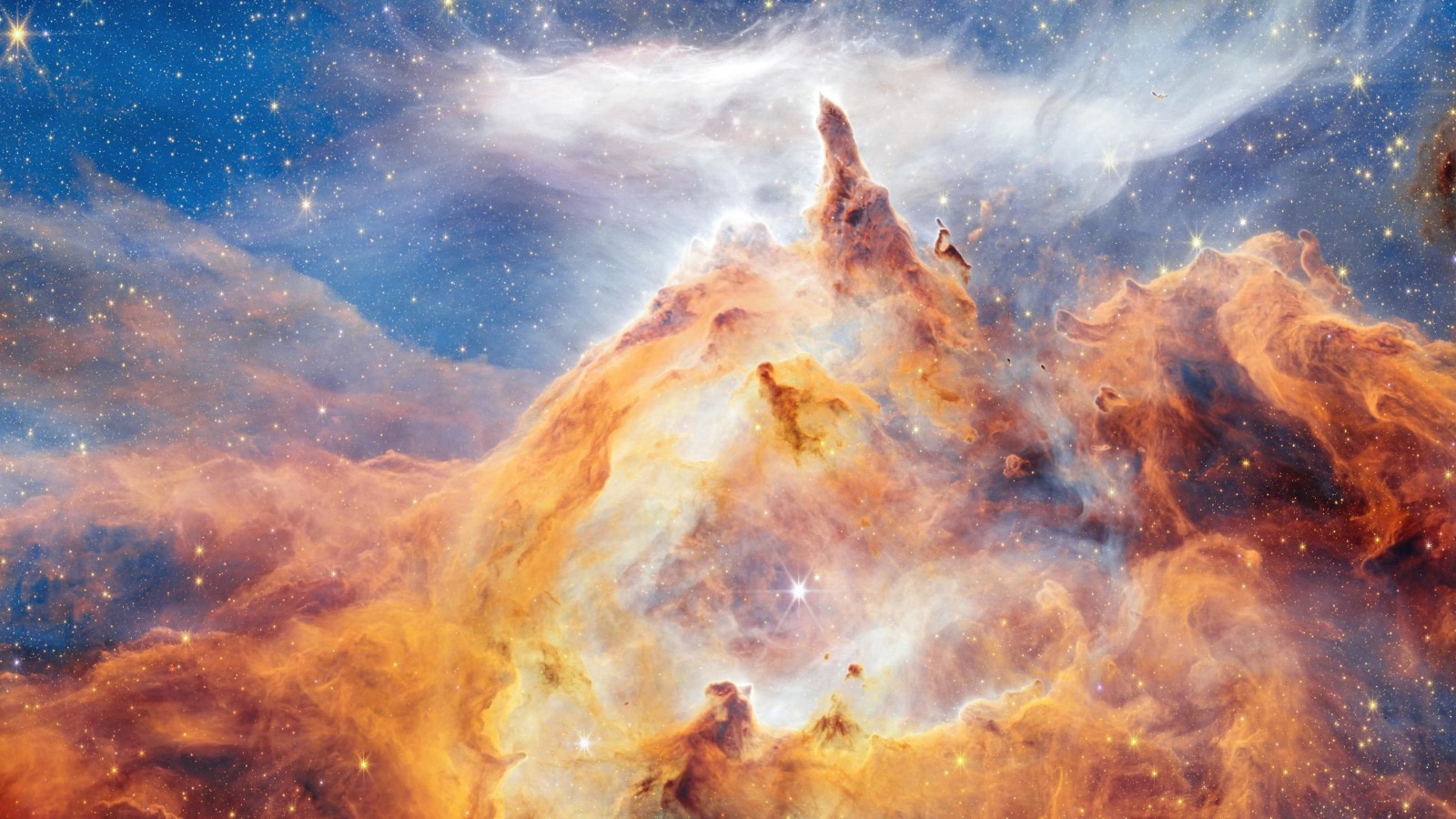
NASA’s James Webb Space Telescope (JWST) has unveiled a breathtaking image of the Lobster Nebula, showcasing a dense cluster of newborn stars known as Pismis 24. Located approximately 5,500 light-years away in the constellation Scorpius, this vibrant stellar nursery offers a rare glimpse into the early stages of massive star formation.
Using its powerful infrared instruments, JWST can peer through dense interstellar dust clouds that usually obscure such regions from view. The new images reveal thousands of stars, some nearly eight times hotter than our Sun, embedded within the glowing gas and dust of the nebula.
Intense radiation and stellar winds from these massive young stars are shaping the surrounding clouds, carving out intricate structures and triggering further star formation. These dynamic processes help astronomers understand how stars and planetary systems evolve in crowded and energetic environments.
The Lobster Nebula observations by JWST also provide crucial data on the chemical makeup and physical conditions of star-forming regions, contributing to a better understanding of the life cycle of matter in our galaxy.
This stunning image not only highlights JWST’s extraordinary capabilities but also marks a milestone in the ongoing exploration of the cosmos and the origins of stars.


Leave a Reply