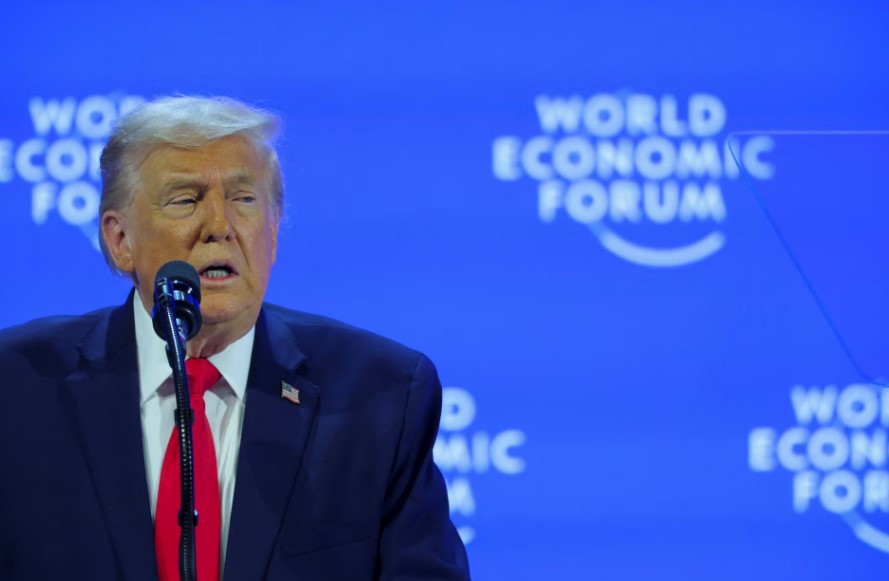
In a historic decision marking one of the most significant legal rebukes of his second administration’s economic policy, the U.S. Supreme Court has ruled that former President Donald Trump lacked the constitutional authority to impose sweeping global tariffs under emergency powers, finding the measures illegal and outside the scope of presidential power.
The ruling, delivered on Friday by the high court, centered on Trump’s use of the International Emergency Economic Powers Act (IEEPA) — a 1977 statute long used by presidents to regulate international trade in genuine emergencies — to authorise broad tariff levies on imports from dozens of countries.
Court rejects presidential tariff authority under IEEPA
Justice majorities concluded that IEEPA does not grant the executive branch unilateral power to impose extensive import duties on global trade partners. The court determined that key tariff actions employed to address trade imbalances, economic competition, and national security concerns exceeded statutory authority and intruded on Congress’s exclusive constitutional power to set trade and tax policy.
Legal analysts say the decision reaffirmed longstanding limits on executive power, emphasising that broad economic measures of this scale require explicit congressional authorisation. Lower courts had earlier found similar emergency-based tariffs unlawful, a ruling now upheld and finalised by the Supreme Court.
Economic implications — refunds, revenue at risk
The decision carries far-reaching economic consequences. Economists estimate that more than $175 billion in U.S. tariff revenue collected under the disputed measures could be subject to refunds if importers file claims with U.S. Customs and Border Protection.
If importers succeed, the Treasury could face substantial liability — dwarfing budgetary sums for major federal agencies — and triggering complex administrative and legal proceedings over reimbursement.
Impact on U.S. trade policy and global markets
Trump’s tariffs — including levies on goods from China, the European Union, India, and others — had reshaped trade dynamics since early 2025, driving up costs for businesses, disrupting supply chains, and prompting global retaliation threats. Some export industries, notably in Australia and other U.S. trading partners, stood to recoup billions in duties if the measures become fully invalidated.
Political and legal fallout
The case underscores a deep constitutional debate over the separation of powers, executive reach, and congressional oversight of trade and taxation. Before reaching the Supreme Court, multiple courts — including the U.S. Court of International Trade and federal appeals courts — found that IEEPA did not authorise the breadth of Trump’s tariffs and signalled judicial scepticism about the administration’s legal rationale.
Trump’s economic bloc had framed the tariff campaign as necessary to correct trade deficits, protect domestic industries, and strengthen America’s global bargaining position. The ruling now challenges that strategy, forcing policymakers to explore alternative statutory tools with narrower scopes if they wish to revive tariff actions.
For more news and update, click here to download our mobile app – Veritas Daily
To explore advertising or sponsorship collaborations, click here to contact us
Leave a Reply