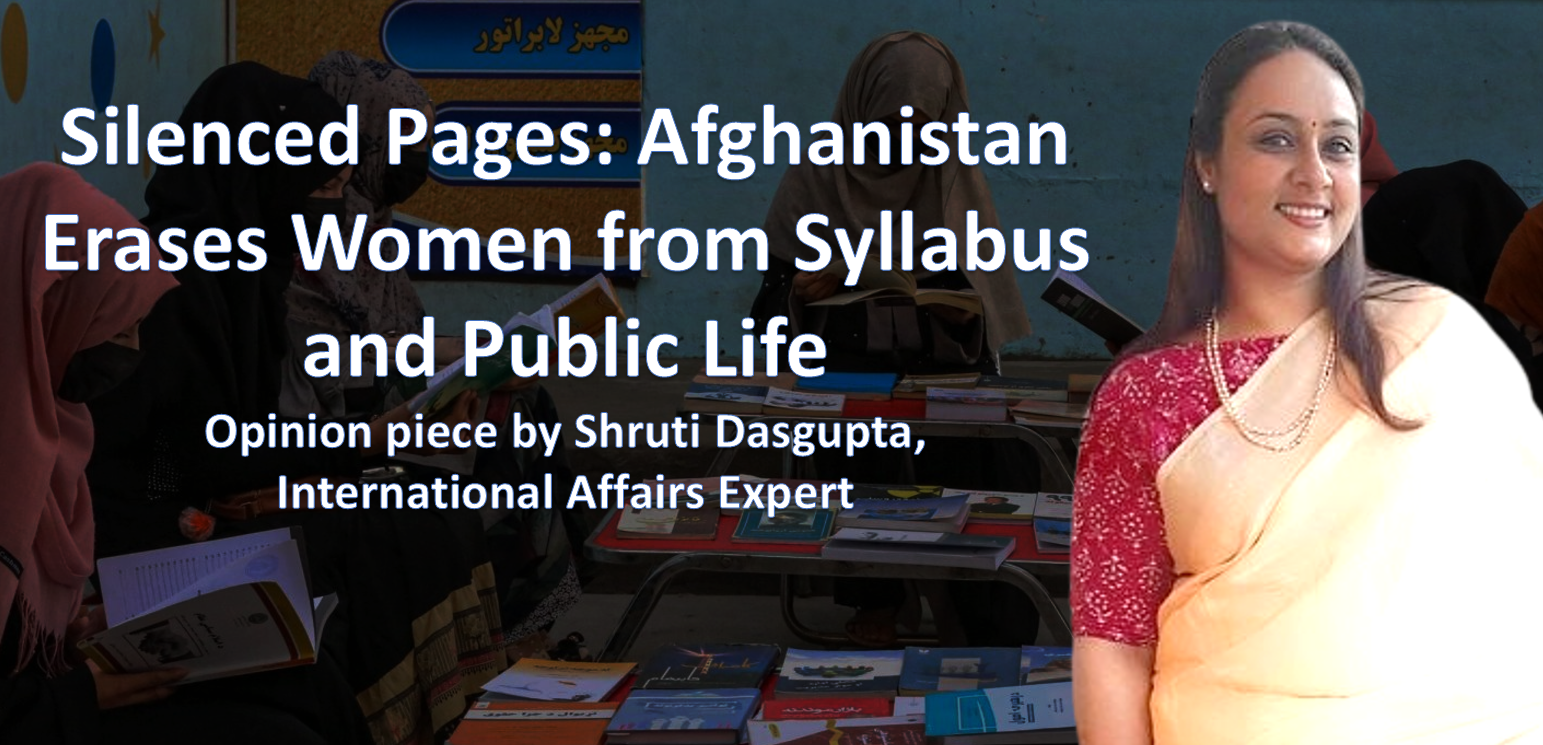
Opinion piece by Shruti Dasgupta: The Taliban follow their path without fear or hesitation. The worst of their actions came in the form of erasure of women from public life. Recently, in a single bureaucratic sweep, the Taliban moved beyond policing women’s bodies and quietly began policing their existence.
The latest directives ask for the removal of books authored by women from university curricula. After banning higher education for women, they ban entire subjects linked to women’s studies, human rights and sexual harassment from public spheres. The most severe of their actions comes against female authors. Thus, marking their latest step in a methodical campaign to shrink women’s influence in public life. This is not a one-off. It is the latest, loudest link in a chain of measures that have, year by year, stripped Afghan women of access, voice and professional future.
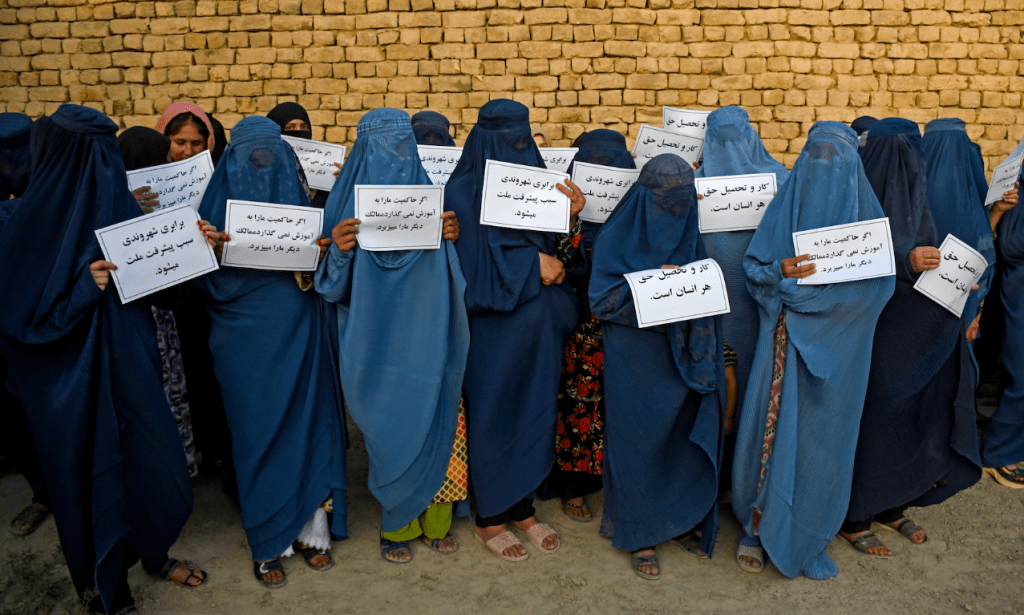
The Latest Ban: Women’s Books Declared “Anti-Sharia” and Purged
Media reports from August to September 2025 show that a wide sweep of university materials was flagged as “of concern.” Among the flagged content were dozens of works authored by women, mostly Irani women, and whole modules such as Gender and Development, Women’s Sociology and The Role of Women in Communication. The reviewing committee stated “conflict with principles of Sharia” as a point of concern and removal of books. University administrators received instruction to remove the flagged works and cease teaching the proscribed subjects.
This move is striking for two reasons. First, it targets authorship: not ideas related to women alone but women as creators became targets of the ban. Second, it reaches into professional training: the ban purges the idea of equality, balanced gender roles, etc. that include basic texts used to teach social work, gender-sensitive policing, rights-based lawyering and health-care modules related to women. All subjects that have real-world consequences for women’s safety and survival were removed from university – almost as if the existence of the concept is abhorrent to Talibani rule.
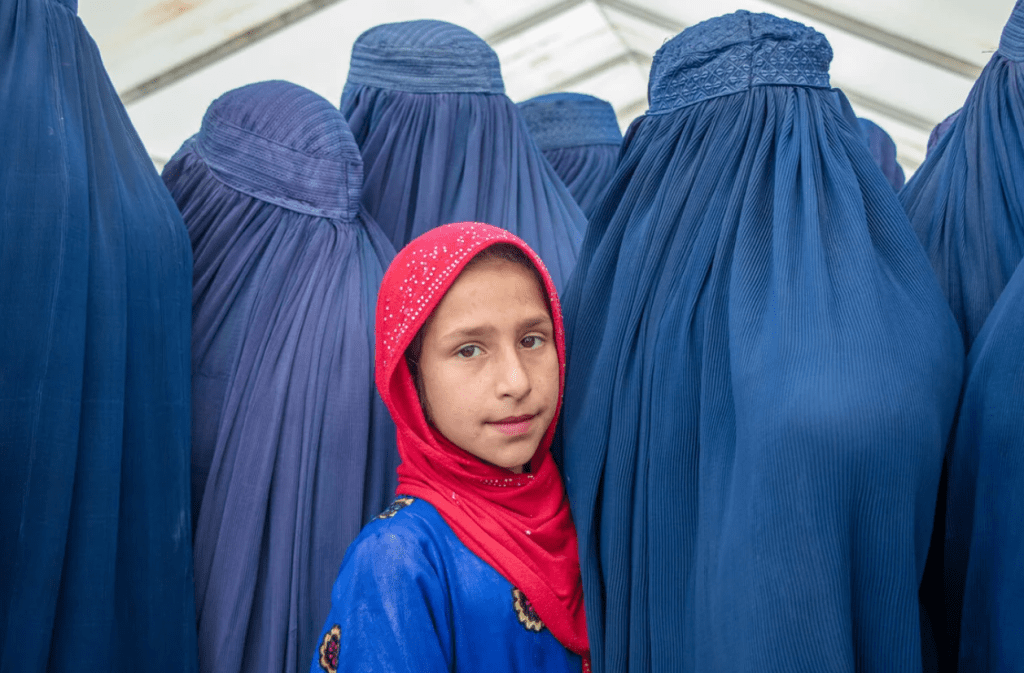
Observers inside Afghanistan describe the purge as bureaucratic but systemic. Review committees reportedly included “religious scholars and experts,” and the Ministry of Higher Education circulated lists of banned titles to campuses nationwide. As reported by BBC, journalists and academic staff who spoke to international outlets repeatedly called the step a deliberate attempt to excise women’s perspectives from knowledge production and public policy training.
Step by Step: How a Society Loses Its Women’s Voices
This recent ban did not emerge from nowhere. It fits a sequential pattern of policies that, over four years, have narrowed the space for women in Afghan public life. The steady attrition looks like this:
- Access Restricted: After the return of Taliban in 2021, everyone assured the world that women’s rights were safe. However, soon universities in some provinces faced new gender-segregation rules. Over time, restrictions hardened to ban secondary and tertiary educational opportunities for women.
- Professional Training Curtailed: In 2024, the midwifery courses, was one of the last entry routes for women into a profession. However, the shutters for women in that profession also came down. Removing midwifery training undermines maternal and neonatal health in a country where female health workers are often the only acceptable providers for women.
- Curriculum Controls: The state began to scrutinize not only who teaches and studies, but what is taught. Classes on human rights, sexual harassment, gender studies and social-work practice came under attack for allegedly contradicting “Islamic principles.”
- Silencing Public Voice: Simultaneously, restrictions came down heavily upon women. Bans on praying among females or speaking in mixed company made women a spectre in Afghanistan. The Taliban’s moral codes put constraints on everything from movement to employment. Today, they have reduced female participation in civic conversation to almost nothing.
- Information Blackouts: More recently, reports emerge of restrictions on communications infrastructure and tighter controls on media. Such actions ensure that women and men, both, have lesser access to resources or information. The Taliban have made it harder for academics, activists, and students to collaborate, publish, or access alternative curricula from abroad.
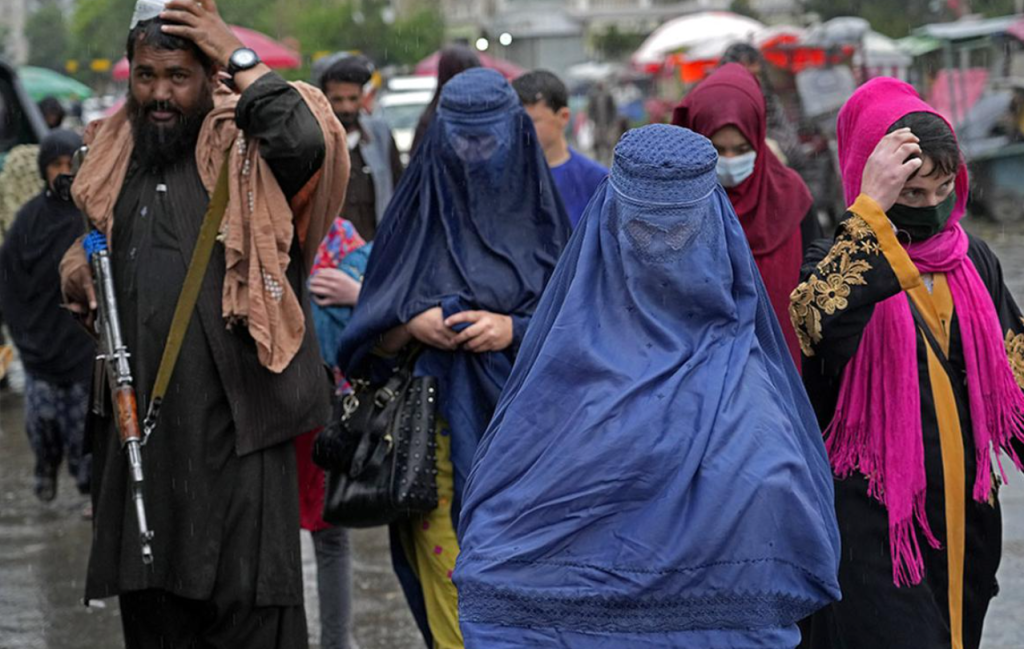
All these steps do more than deny opportunities to females, instead, they make women invisible in society. Where females once trained midwives, lawyers, teachers, and social workers, the institutional scaffolding that produced those professionals now dissolves.
Who Benefits and What the World Can Do
Why does the Taliban target books by women? The answer lies in control. Knowledge shapes norms; authorship and curriculum shape moral imagination. By purging women from the academy, the regime seeks to control what is known about women, and therefore how society treats them.
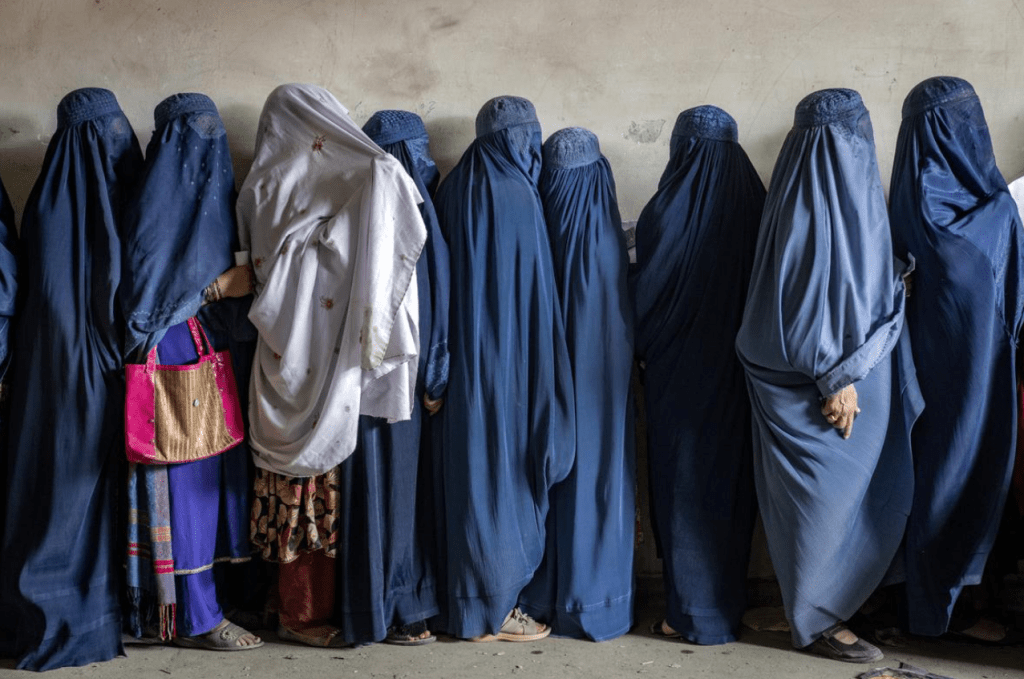
International pressure has produced limited concessions in the past. Human-rights groups, UN agencies, and pressure by foreign governments are the only hope for Afghan women. The Afghan diaspora must ensure that international academic networks create fellowship routes, reading groups, and mentorships to keep women scholars connected to global research and employment opportunities.
Afghan Women – The Pages That Refuse to Be Burned
When a regime decides who may write, teach, or be read – it chooses the future it wants. The Taliban’s ban on books by women is not a theological quibble; it is a policy of erasure. Every removed title, every blacklisted subject, is a strand cut from the fabric of civic life. But words survive. Students who once read those books remember. Teachers who once taught them teach elsewhere. Digital copies and oral histories continue to circulate in private.
The effort to silence women is relentless, but not total; knowledge flees across borders and languages.
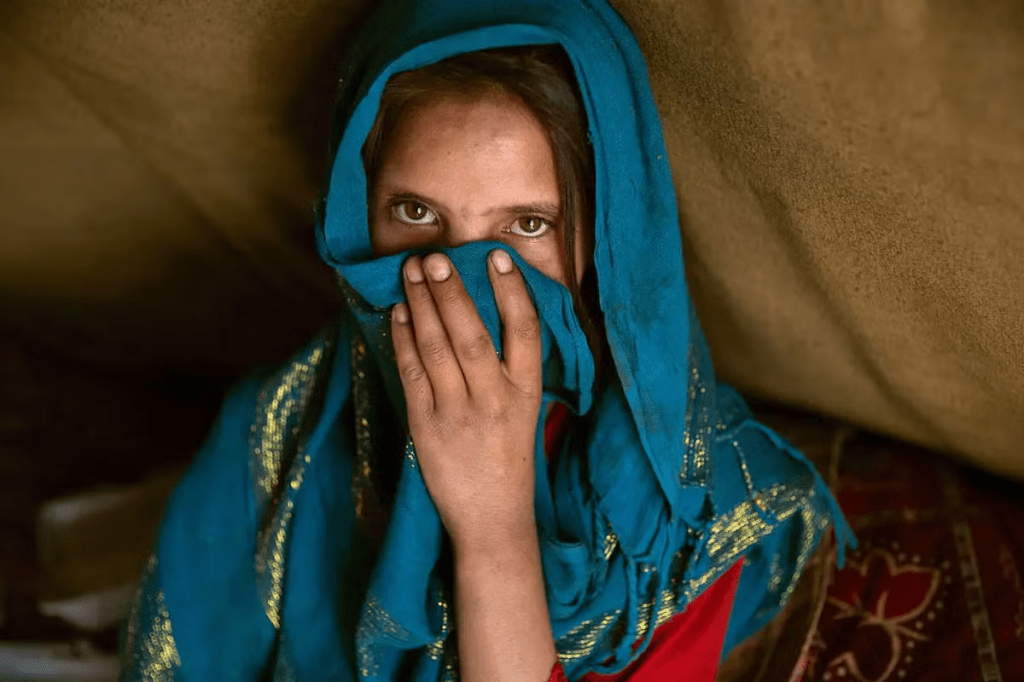
Supporting that flight by archiving voices, protecting students, and holding the international community to its responsibilities — is how women of the world show the Taliban that these pages will not be permanently turned. Letting this generation of women be reduced to footnotes, is not acceptable. The world must act not merely in outrage but in consistent, practical help – for when books go quiet, the work of rebuilding dignity begins page by page.
Leave a Reply