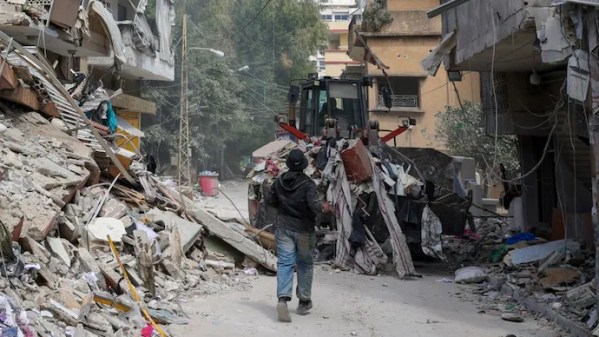
Israel and Lebanon Hold US-Mediated Talks Amid Ongoing Conflict

Israeli and Lebanese envoys are set to meet in Washington on Tuesday for United States-mediated talks, as US President Donald Trump seeks to reduce tensions following weeks of conflict between Israel and Iran-backed Hezbollah.

The talks come amid parallel diplomatic efforts linked to a ceasefire framework between the United States and Iran, brokered by Pakistan. The United States has urged both Israel and Lebanon to move toward ending hostilities.

Israel intensified air operations in Lebanon after Hezbollah launched missiles on March 2, three days after the start of the US-Israel conflict involving Iran. Israeli forces later expanded ground operations in southern Lebanon and issued evacuation directives to residents in areas identified as Hezbollah positions.

According to Lebanon’s health ministry, Israeli strikes in Lebanon have killed more than 2,080 people, including 252 women and 166 children. Hezbollah has not released official figures for its fighters. Sources told Reuters on March 27 that more than 400 Hezbollah fighters have died since March 2.

Hezbollah has launched missiles primarily toward areas near Israel’s northern border. It has also targeted cities including Haifa and Tel Aviv. Israeli authorities reported that these attacks have caused damage and triggered air raid alerts.

Israel stated that missile strikes since March 2 have killed two civilians and 13 soldiers. Emergency services responded to multiple impact sites, and authorities directed residents to shelters during attacks.

The Washington meeting marks a rare instance of direct engagement between Israeli and Lebanese representatives. The discussions aim to address the ongoing conflict and assess possible steps to reduce military activity along the border.

For more news and update, click here to download our mobile app – Veritas Daily

To explore advertising or sponsorship collaborations, click here to contact us
US and Iran to Return to Islamabad for Second Round of Peace Talks This Week

US and Iranian negotiation teams will return to Islamabad later this week to resume peace talks, four sources familiar with the matter told Reuters. The sources spoke on condition of anonymity due to the sensitivity of the discussions.

The talks will focus on easing tensions and exploring steps toward a broader agreement, the sources said. It was not clear which officials would take part on either side or how long the discussions would last.

The announcement comes days after the first round of talks in Islamabad collapsed on April 12 after more than 21 hours of negotiations. US Vice President Vance, who led the American delegation, said Iran did not accept Washington’s final and best offer. Iran’s Foreign Ministry confirmed that no deal was reached, though both sides exchanged messages and draft texts during the session. Trump posted on Truth Social after the talks ended that Iran was unwilling to give up its nuclear ambitions.

Pakistan’s Defence Minister Khawaja Asif said on Monday that a next round of negotiations was expected soon, signaling that Islamabad intended to keep its mediation role alive. Pakistan brokered the original ceasefire on April 7 and hosted the first round of talks.

The US declared a blockade on all Iranian ports on Monday at 1400 GMT following the collapse of the Islamabad talks. Iran called the blockade illegal and an act of piracy and warned that no port in the Persian Gulf and the Gulf of Oman would be safe. China called the blockade dangerous and irresponsible on Tuesday. The return of both sides to the negotiating table signals that despite the escalation, the two-week ceasefire window that expires on April 21 continues to hold as a framework for diplomacy.

For more news and update, click here to download our mobile app – Veritas Daily

To explore advertising or sponsorship collaborations, click here to contact us

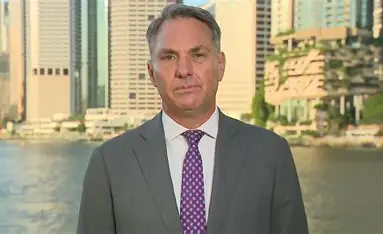
Australia Backs Open Strait of Hormuz but Links Involvement to Ceasefire Stability

Australia reiterated its support for freedom of navigation through the Strait of Hormuz on Tuesday, with Defence Minister Richard Marles saying Canberra is working with international partners including France and the United Kingdom to support stability in the region, but that any direct Australian involvement would depend on the durability of the ceasefire.

Marles told ABC broadcaster that Australia needs to see freedom of navigation through the Strait of Hormuz and that the country is committed to seeing the waterway reopen and the global fuel supply chain return to normal. He said Australia is working alongside France and the United Kingdom as part of broader international efforts.

Asked whether Australia supports the US blockade of Iranian ports, Marles did not endorse the move directly. He said that any effort to contribute to reopening the strait would depend on what plays out during the remainder of the ceasefire period and on the circumstances in the waterway at that time. He described the current ceasefire situation as uncertain.

Australia’s position aligns with the framework that French President Emmanuel Macron announced on Monday, under which France and the United Kingdom will lead a multinational mission to restore freedom of navigation through the Strait, separate from the warring parties. Macron said around 15 countries have engaged on the initiative, which he described as a defensive effort coordinated with Iran.

Australian Prime Minister Anthony Albanese said on Monday that the US had not requested Australian participation in the blockade and that the announcement came without consultation. He called for negotiations to continue and for the Strait to open to all vessels in line with international law.

The Strait of Hormuz has remained closed to most traffic since the war began on February 28. The US blockade on Iranian ports took effect on Monday at 1400 GMT, drawing criticism from China, Russia, ASEAN, and several European nations.

For more news and update, click here to download our mobile app – Veritas Daily

To explore advertising or sponsorship collaborations, click here to contact us
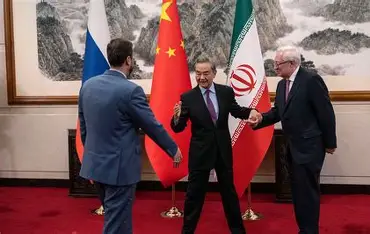
China Calls US Blockade of Iranian Ports Dangerous and Irresponsible

China called the US blockade around Iranian ports dangerous and irresponsible on Tuesday, as tensions around the Strait of Hormuz continued to rise following the collapse of peace talks in Islamabad over the weekend.

Chinese Foreign Ministry spokesman Guo Jiakun told reporters at a news conference that the US increased military operations and took targeted blockade action that will only worsen tensions and undermine the ceasefire agreement that both sides agreed to on April 7. He said the blockade further threatens safe passage through the Strait of Hormuz.

Guo’s remarks came after Trump warned on Monday that Iranian fast-attack boats approaching the US blockade would be immediately eliminated, and after the US military declared the blockade effective from 1400 GMT on Monday, covering all vessels entering or departing Iranian ports on both sides of the waterway.

China has consistently called for a diplomatic resolution to the conflict since the US and Israel launched strikes on Iran on February 28. Beijing and Moscow both vetoed a UN Security Council resolution on April 7 that sought to reopen the Strait of Hormuz. Chinese President Xi Jinping said on Tuesday that China would play a role in promoting peace talks in the Middle East and that Beijing supports a diplomatic resolution to the conflict. Russian Foreign Minister Lavrov held talks with Chinese Foreign Minister Wang Yi in Beijing on Tuesday, with the two sides coordinating their response to the escalation.

China’s statement adds to a series of objections to the US blockade from Russia, ASEAN, France, the United Kingdom, and Australia, all of which have called for a return to negotiations or expressed concern about the impact on global energy markets and freedom of navigation.

For more news and update, click here to download our mobile app – Veritas Daily

To explore advertising or sponsorship collaborations, click here to contact us

Iran and Oman Foreign Ministers Discuss Ceasefire and Path to Regional Stability

Iranian Foreign Minister Abbas Araghchi held a phone call with Oman’s Foreign Minister Badr bin Hamad Albusaidi on Tuesday to discuss developments in the ceasefire and ongoing negotiations between Iran and the US, according to Iran’s Mehr news agency.

Araghchi told Albusaidi that Iran remains committed to preserving regional peace and stability in cooperation with all countries in the region and away from what he described as destructive US interventions. Albusaidi expressed hope that peace and stability would return to the region as soon as possible.

Oman previously served as a mediator in the negotiations between the US and Iran that took place before the war began on February 28. Oman said after the conflict broke out that a potential agreement had been within reach at the time the strikes began. Oman also mediated the release of two French nationals held in Iran, facilitating their departure from the country on April 7.

On Monday, Araghchi told his Russian counterpart Sergei Lavrov by phone that what he called provocative actions by the United States could have consequences for global peace and security, according to CNN. Lavrov arrived in Beijing on Tuesday for talks with Chinese Foreign Minister Wang Yi on the escalation of the conflict and the US blockade of Iranian ports.

The call between Araghchi and Albusaidi signals that Tehran continues to keep its diplomatic channels open even as the US blockade on Iranian ports took effect on Monday and as an Iranian lawmaker warned that Iran would return to war unless Washington recognised Tehran’s demand for control over the Strait of Hormuz. Pakistan’s Defence Minister said on Monday that a next round of Iran-US negotiations was expected soon.

For more news and update, click here to download our mobile app – Veritas Daily

To explore advertising or sponsorship collaborations, click here to contact us

Iranian MP Warns of Return to War Unless Tehran Gets Control of Strait of Hormuz

An Iranian lawmaker warned on Tuesday that Iran would return to war if the US does not recognise Tehran’s demands, including control over the Strait of Hormuz, and said the ceasefire should not be extended unless those conditions are met.

Ebrahim Rezaei told local media that either Iran’s rights, including control over the Strait of Hormuz, are acknowledged, or Iran returns to war. In a post on X, he added that failure to secure these demands would mean the continuation of hostilities involving the United States and Israel.

Rezaei’s warning places the Strait of Hormuz at the center of any future negotiation, a position that aligns with Iran’s 10-point proposal which calls for Iranian dominance and oversight of the waterway as a condition of any peace deal. Iran’s Supreme National Security Council stated after the April 7 ceasefire that enemy-linked vessels do not and will not have the right to pass through the strait, and that existing restrictions would continue permanently even after the war ends.

The warning comes as the US declared a blockade on all Iranian ports on Monday at 1400 GMT, cutting off traffic to and from Iranian coastal areas. Iran’s armed forces called the blockade illegal and an act of piracy, and warned that no port in the Persian Gulf and the Gulf of Oman would be safe. Trump warned on Monday that Iranian fast-attack boats approaching the US blockade would be immediately eliminated.

Pakistan’s Defence Minister said on Monday that a next round of Iran-US negotiations was expected soon. The two-week ceasefire window that both sides agreed to on April 7 continues to run, but the breakdown of Islamabad talks and the US blockade have placed the agreement under pressure from both directions

For more news and update, click here to download our mobile app – Veritas Daily

To explore advertising or sponsorship collaborations, click here to contact us

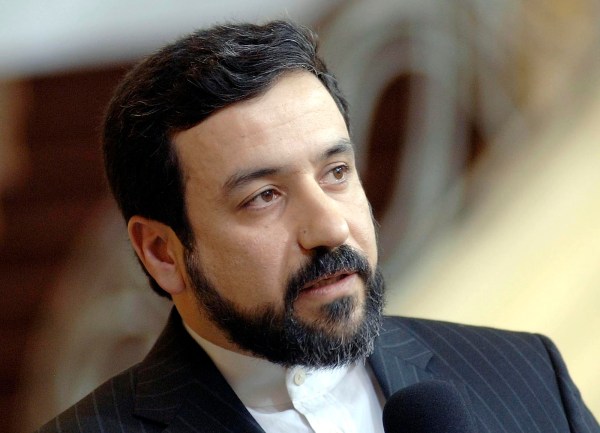
Iran’s Araghchi Blames US ‘Shifting Goalposts’ for Talks Collapse

Iran’s Foreign Minister Abbas Araghchi said negotiations with the United States collapsed due to what he described as changing demands from Washington during talks in Islamabad.

Araghchi said both sides were close to reaching an agreement before the discussions broke down. He stated that Iran engaged in the talks in good faith but encountered “maximalism, shifting goalposts and blockade” from the US side.

He added that the two sides were “just inches away” from finalising an understanding before differences emerged at a critical stage.

The talks, described as among the highest-level engagements between the two countries in decades, ended without a deal after extended negotiations. Key issues included ceasefire terms, sanctions relief, nuclear policy, and regional security arrangements.

The breakdown comes amid a fragile ceasefire between the United States and Iran, with tensions continuing in parts of the region. Both sides have signalled that further diplomatic efforts may be required despite the current setback.

Araghchi said future progress would depend on mutual conduct, stating that goodwill must be met with reciprocal action for negotiations to succeed.

For more news and update, click here to download our mobile app – Veritas Daily

To explore advertising or sponsorship collaborations, click here to contact us
Trump Says Iran Ceasefire ‘Holding Well’, US Plans Hormuz Blockade

US President Donald Trump said the ceasefire with Iran is “holding well” but confirmed that the United States military will move forward with a blockade in the Strait of Hormuz following failed negotiations.

Trump said the decision comes after talks with Iran in Islamabad ended without an agreement, increasing pressure on the existing truce.

He stated that the US Navy has been instructed to begin operations to block maritime traffic linked to Iran and to enforce restrictions aimed at limiting Tehran’s control over the waterway.

US military officials later clarified that the blockade will primarily target vessels entering or leaving Iranian ports, while allowing transit for ships heading to non-Iranian destinations.

The Strait of Hormuz handles a significant share of global oil shipments, and the announcement has raised concerns over energy markets and shipping routes.

Iran has warned that any military enforcement in the strait could be seen as a violation of the ceasefire and has signaled possible retaliation.

The move comes amid continued tensions despite the ceasefire, with both sides maintaining military readiness as diplomatic efforts remain uncertain.

For more news and update, click here to download our mobile app – Veritas Daily

To explore advertising or sponsorship collaborations, click here to contact us

Kuwait Says Iranian Drones Targeted National Guard Facilities

Kuwait’s military said it intercepted and responded to seven drones that entered its airspace over the past 24 hours, attributing the incident to Iran.

In a statement, the Kuwaiti army said the drones targeted facilities linked to the Kuwait National Guard. Authorities said personnel were injured in the attack and are receiving treatment, with their condition reported as stable.

The statement said the military “dealt with” the drones, without providing further operational details. The incident follows earlier reports from Kuwaiti media that a National Guard facility sustained damage from drone activity.

The development comes amid heightened regional tensions despite a ceasefire between the United States and Iran earlier this week.

Iran’s Islamic Revolutionary Guard Corps previously said its forces had not launched missiles at any country during the ceasefire period. The statement did not address the drone incidents reported by Kuwait.

The reported attack adds to concerns over the stability of the ceasefire and the risk of escalation across the Gulf region. Officials in several countries have called for restraint and adherence to ceasefire terms as diplomatic efforts continue.

For more news and update, click here to download our mobile app – Veritas Daily

To explore advertising or sponsorship collaborations, click here to contact us
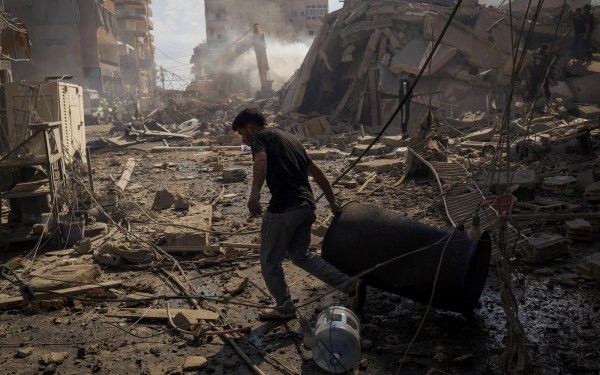
Iran Urges US to Enforce Ceasefire Commitments in Lebanon

Iran’s Foreign Minister Abbas Araghchi said the United States must uphold ceasefire commitments that include extending the truce to Lebanon.

Araghchi made the remarks during a phone call with Mohammad Reza Shibani, according to Iranian reports. He said ongoing Israeli attacks in Lebanon should stop in line with the ceasefire understanding.

Iran has maintained that the ceasefire framework covers broader regional hostilities, including operations in Lebanon. The United States and Israel have stated that Lebanon is not part of the agreement, leading to differing interpretations.

Araghchi’s comments follow similar statements by Mohammad Bagher Ghalibaf, who said negotiations with the United States cannot proceed unless the ceasefire is implemented across all fronts, including Lebanon.

The issue has become a central point of contention ahead of planned talks in Islamabad. Iranian officials have warned that continued military activity in Lebanon could affect the negotiation process.

The ceasefire, announced earlier this week, aims to pause hostilities and create conditions for dialogue. However, ongoing strikes and disagreements over its scope have raised uncertainty about its durability.

For more news and update, click here to download our mobile app – Veritas Daily

To explore advertising or sponsorship collaborations, click here to contact us
Powered by WordPress.com.

Up ↑