US Warns China Involvement in Iran Could Complicate Relations

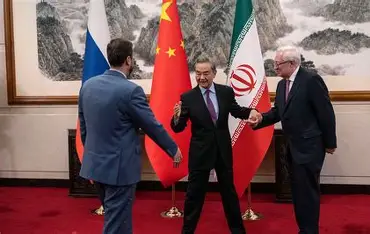
The United States said any involvement by China in Iran that conflicts with US interests could complicate bilateral relations, according to comments from Jamieson Greer.

Speaking in an interview, Greer said Washington seeks a stable relationship with China but cautioned that developments linked to Iran could create challenges. He stated that US policymakers are monitoring the situation as tensions continue in the Middle East.

Greer added that he expects Donald Trump to hold a constructive meeting with Chinese President Xi Jinping next month. He noted, however, that several issues between the two countries remain unresolved.

The remarks come amid ongoing conflict involving Iran and a fragile ceasefire between the United States and Tehran. Analysts have pointed to the possibility of broader geopolitical involvement as a factor that could affect negotiations and regional stability.

China has maintained ties with Iran in areas including trade and energy, while also engaging with global powers on diplomatic and economic matters. Any shift in Beijing’s role in the conflict could influence both regional dynamics and US-China relations.

The situation remains under close observation as diplomatic efforts continue and global powers assess their positions in the evolving crisis.

For more news and update, click here to download our mobile app – Veritas Daily

To explore advertising or sponsorship collaborations, click here to contact us

NATO Faces Strain as Iran Conflict Exposes Divisions

The NATO faces increasing internal strain as disagreements between the United States and its allies deepen over the conflict involving Iran.

Donald Trump has criticized NATO members for not supporting US military actions, calling their stance a lasting setback for the alliance. His comments follow long-standing concerns over defense spending and burden-sharing among member states.

German Chancellor Friedrich Merz described the situation as a transatlantic stress test, highlighting tensions between European allies and Washington.

Analysts said the Middle East crisis has intensified existing divisions within NATO. Differences over military engagement and strategic priorities have raised concerns about the alliance’s cohesion.

Jim Townsend said the alliance is closer to a potential break than at any time in its history. He stated that a return to previous levels of cooperation appears unlikely in the near term.

The debate has renewed questions about NATO’s long-term stability, particularly if the United States reduces its role in the alliance. Experts said the current situation could reshape transatlantic relations and defense cooperation.

The Iran conflict has become a focal point for broader disagreements, with member states balancing regional security concerns against domestic and international priorities.

For more news and update, click here to download our mobile app – Veritas Daily

To explore advertising or sponsorship collaborations, click here to contact us

West Asia War Triggers Global Energy Crisis as Nations Scramble

The conflict in West Asia has sent shockwaves through the global economy, disrupting oil flow through the Strait of Hormuz and triggering fuel shortages, price surges and emergency measures across continents. Analysts describe the disruption as the largest oil supply shock in decades.

The Strait of Hormuz handles approximately 20 percent of the world’s oil. Its disruption since the war began on February 28, 2026, has pushed Brent crude above $113 per barrel and set off a chain of responses from governments that depend on Middle East supply. Asia bears the heaviest impact due to its dependence on Gulf oil imports.

Bangladesh shut universities and suspended schools and coaching centres in parts of the country to reduce power consumption. Authorities introduced fuel rationing as supply pressure mounts. Sri Lanka activated an odd-even vehicle rationing system, declared selected public holidays and shut schools and offices on rotation to conserve fuel. Pakistan temporarily closed schools. The Philippines declared a national energy emergency, cancelled flights and shut fuel stations as authorities monitor reserves. Thailand introduced energy-saving measures and reduced fuel exports. Bhutan and Nepal face supply stress and rising import costs.

In Europe, Germany entered crisis mode as industry slowed and gas prices rose. Spain announced a financial relief package worth five billion euros. Australia saw panic buying at fuel stations as the government moved to control price increases.

The United States engaged energy companies and industry leaders to stabilise supply chains, manage fuel prices and prevent an economic slowdown, signalling coordination between government and the private sector.

Governments across the world responded with fuel tax cuts, subsidies and emergency declarations to ease the burden on citizens and contain inflation. Officials warn the situation deteriorates further if the conflict continues and the Strait of Hormuz remains disrupted.

For more news and update, click here to download our mobile app – Veritas Daily

To explore advertising or sponsorship collaborations, click here to contact us

Trump Sends Mixed Signals on Iran: Threats, Talks and a Deal on the Table

United States President Donald Trump issued a series of statements on Iran on Monday, combining threats of escalation with signals of openness to a settlement, as the conflict between Washington, Israel and Tehran intensifies.

Trump said the United States could seize Kharg Island, the hub that handles the majority of Iran’s oil exports, describing the operation as achievable. The Pentagon weighs options that include raids on sites including Kharg Island, though officials have ruled out a ground invasion for now.

In the same breath, Trump described Iranian leaders as reasonable and said both sides could reach a deal. He extended a pause on strikes targeting Iranian energy infrastructure until April 6, 2026, citing ongoing talks, and said Tehran agreed to most points in a 15-point U.S. peace proposal. Iran continues to deny that direct negotiations with Washington take place.

The posture reflects a strategy of applying pressure while keeping channels open. Mediation efforts continue through Pakistan, which serves as a back-channel between the two sides, but no confirmed breakthrough has emerged.

Israel said it coordinates with Washington and awaits U.S. decisions on escalation, including the possibility of ground involvement. Israeli forces continue to strike Iranian territory as operations expand in Lebanon. The Pentagon confirmed it monitors developments and assesses options as troop numbers in the region exceed 50,000.

For more news and update, click here to download our mobile app – Veritas Daily

To explore advertising or sponsorship collaborations, click here to contact us
Iran Parliament Pushes to Quit Nuclear Treaty

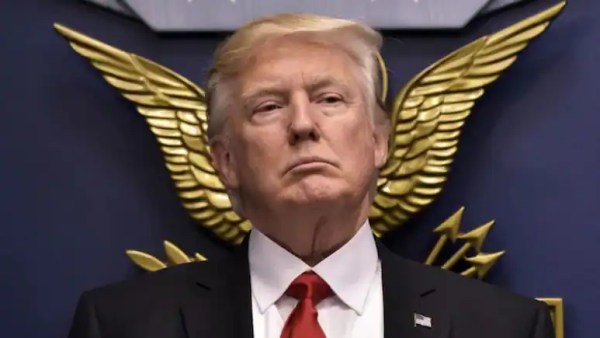
Members of the Iranian parliament called on Monday for Tehran to withdraw from the Treaty on the Non-Proliferation of Nuclear Weapons, citing U.S. and Israeli strikes on Iranian territory as justification for abandoning commitments the country has held since 1970.

Parliament member Alaeddin Boroujerdi stated that Iran’s membership in the NPT no longer makes sense given the current circumstances and said the majority of lawmakers share this position. “We are not seeking to build a nuclear bomb, but one cannot simultaneously play by the rules and be subjected to bombing,” Boroujerdi told SNN TV channel. “Consequently, the time has come to withdraw from the NPT.”

Iran signed the NPT in 1968 and ratified it in 1970 under Shah Mohammad Reza Pahlavi, who developed the country’s nuclear program with U.S. support beginning in the 1950s. Tehran joined the International Atomic Energy Agency in 1958. Following the 1979 Islamic Revolution, authorities suspended the nuclear program before resuming development of nuclear technology in the late 1980s. Since 2003, a fatwa issued by Supreme Leader Ayatollah Ali Khamenei has prohibited Iran from developing nuclear weapons.

A withdrawal from the NPT would remove the legal framework that allows IAEA inspectors to monitor Iranian nuclear sites and would mark a shift in Tehran’s stated position at a moment when U.S.-Iran talks over a peace proposal continue. The United States and Israel have not responded publicly to the parliamentary call.

For more news and update, click here to download our mobile app – Veritas Daily

To explore advertising or sponsorship collaborations, click here to contact us
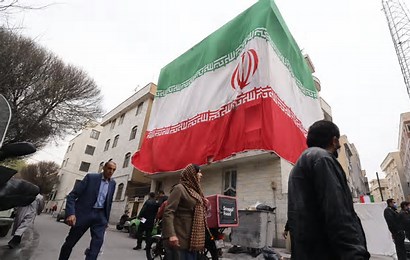
U.S. Troop Count in Middle East Crosses 50,000

The number of U.S. troops deployed in the Middle East has surpassed 50,000, the New York Times reported on Monday, as Washington intensifies its military posture across the region amid the ongoing conflict with Iran.

The figure crossed that threshold with the arrival of 2,500 Marines and 2,500 sailors, pushing the total roughly 10,000 above the level the U.S. military maintains in the region under normal conditions. The count does not include the 4,500 personnel aboard the aircraft carrier USS Gerald R. Ford, which left the Red Sea in mid-March after a fire broke out on the ship.

The USS Gerald R. Ford sailed to Crete before proceeding to the Port of Split on Croatia’s Adriatic coast for maintenance. Its departure removed a significant asset from the Red Sea at a moment when Houthi forces in Yemen continue to launch drone and missile strikes and have threatened to close the Bab al-Mandeb Strait if the U.S. launches a ground invasion of Iran.

The troop buildup signals that Washington prepares for scenarios beyond airstrikes, even as President Donald Trump publicly pushes for a negotiated settlement with Tehran. Trump extended a pause on strikes targeting Iranian energy infrastructure until April 6, 2026, citing ongoing talks, while Iran allowed 20 oil tankers to pass through the Strait of Hormuz in what Trump described as a sign of respect from Tehran.

For more news and update, click here to download our mobile app – Veritas Daily

To explore advertising or sponsorship collaborations, click here to contact us

Israel Eliminates Senior Hamas Financial Official in Lebanon

Israeli forces killed Walid Muhammad Dib, a senior Hamas official who operated within the organization’s central financial ministry, in Lebanon.

Dib ran financial transfer operations that moved funds to Hamas departments across multiple regions, including Judea and Samaria, Lebanon, and other countries. He also recruited terror operatives from Syria and Lebanon as part of his duties under Hamas’ financial structure.

Officials confirmed that Dib held a significant role within Hamas’ financial network and that his position gave him reach across several countries and territories in the region.

The operation marks a continuation of Israeli efforts to target Hamas’ financial infrastructure and disrupt the movement of funds that support the group’s activities. Israeli authorities identified Hamas’ financial ministry as a command structure through which Dib received direction and distributed resources to operational departments.

Hamas has not issued a statement in response to the killing. Israeli officials have not released details on the method or precise location of the operation.

The elimination of financial operatives forms part of a broader Israeli strategy to cut off Hamas from the funding networks that sustain its personnel, recruitment operations, and regional activities.

For more news and update, click here to download our mobile app – Veritas Daily

To explore advertising or sponsorship collaborations, click here to contact us
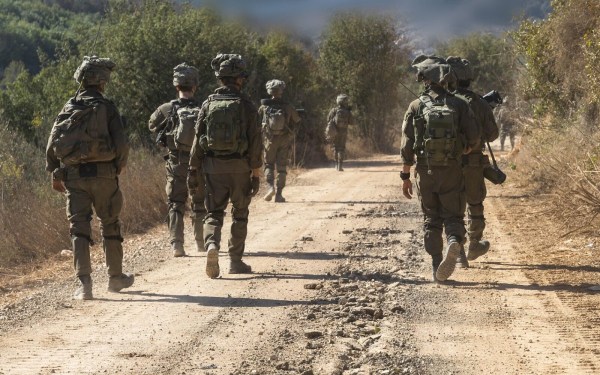
Bahrain and UAE Air Defenses Intercept Hundreds of Iranian Missiles and Drones

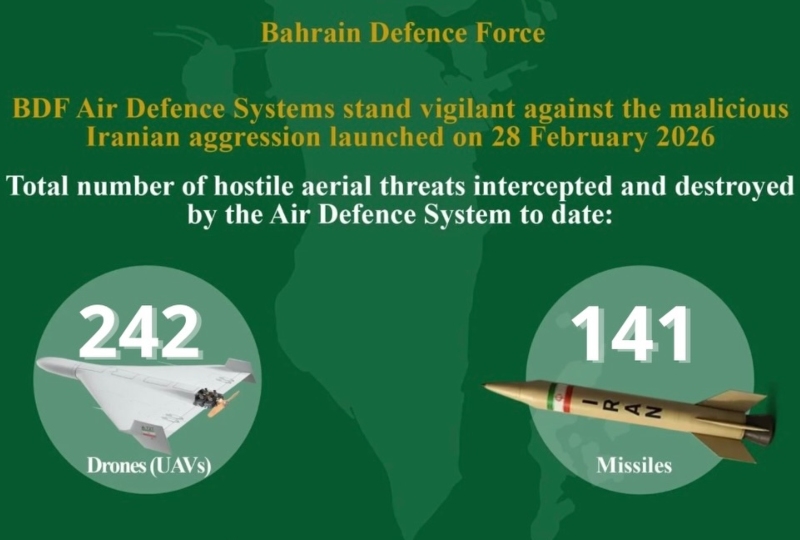
Bahrain’s Defence Force announced on Friday that its air defense systems have intercepted and destroyed 141 ballistic missiles and 242 drones since Iran began targeting the kingdom on February 28, as Gulf states face a sustained campaign of attacks amid the ongoing US-Iran war.

The Bahrain Defence Force General Command stated that its personnel continue to confront waves of Iranian attacks and affirmed that Bahrain’s airspace remains protected. Authorities described the attacks on civilian sites and private property as violations of international humanitarian law and the UN Charter, warning they pose a threat to regional peace and security.

The BDF advised residents to stay away from affected areas and suspicious objects, avoid filming military operations or debris sites, and rely solely on official sources for information.

The UAE faces a similar scale of attack. Since the start of hostilities, UAE air defenses have intercepted 334 ballistic missiles, 15 cruise missiles, and 1,714 drones. On Thursday alone, air defenses dealt with seven ballistic missiles and 15 drones. The attacks have killed two members of the UAE armed forces and six civilians of Pakistani, Nepalese, Bangladeshi, and Palestinian nationality, and left 158 people injured.

The UAE Ministry of Defense stated it remains on high alert to confront threats and protect the country’s sovereignty and national capabilities.

Hostilities across the region escalated after Israel and the US launched joint strikes on Iran on February 28, killing more than 1,200 people including then-Supreme Leader Ali Khamenei. Iran has since targeted Israel, Jordan, Iraq, and Gulf states hosting US military assets, causing casualties, infrastructure damage, and disruption to global markets and aviation.

For more news and update, click here to download our mobile app – Veritas Daily

To explore advertising or sponsorship collaborations, click here to contact us
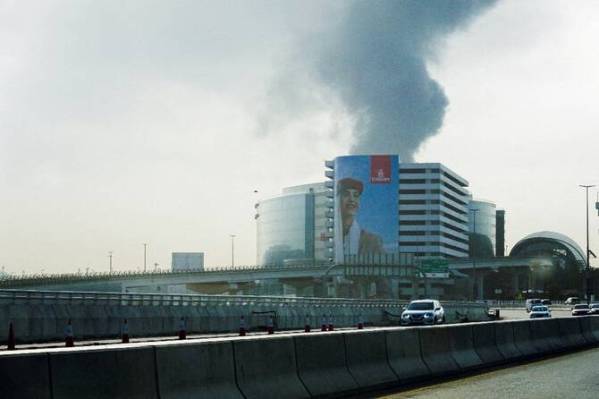
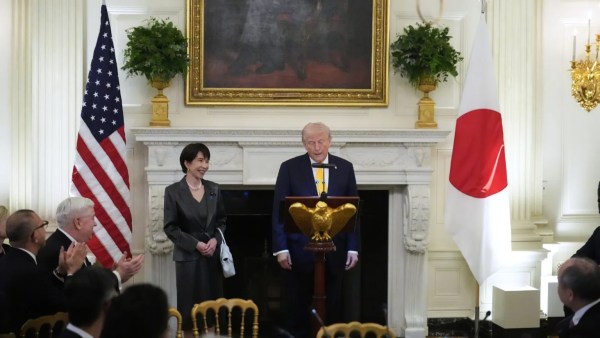
Takaichi Meets Trump to Reaffirm Alliance Amid Hormuz Security Tensions

Japanese Prime Minister Sanae Takaichi met President Donald Trump at the White House on Thursday to reaffirm bilateral ties, as Trump pressed Japan to take a larger role in protecting the Strait of Hormuz amid the Iran war.

Takaichi told Trump through an interpreter that the global security situation was “very severe” and that she believed only he could “achieve peace across the world.” Trump described Takaichi as a “popular, powerful woman” but pressed Japan to “step up,” noting the country draws over 90 percent of its crude oil imports through the strait.

Tension surfaced during the meeting when Trump referenced Japan’s 1941 attack on Pearl Harbor while discussing military surprise tactics. Takaichi did not respond to the remark.

After the meeting, Takaichi said both sides agreed on the importance of keeping the Strait of Hormuz open. She outlined the limits Japan faces under its war-renouncing Constitution, which restricts its forces from operating in areas where they could engage in combat.

The two sides announced a $40 billion nuclear energy deal between US-based GE Vernova and Japan’s Hitachi to build reactors in the United States. A second batch of investment deals may reach up to $63 billion.

Japan joined several European nations earlier Thursday in a joint statement calling on Iran to halt attacks on shipping in the strait and expressing readiness to support efforts for safe passage.

Trump has asked Beijing to delay his planned China visit, initially set for March 31, due to the ongoing Iran conflict.

For more news and update, click here to download our mobile app – Veritas Daily

To explore advertising or sponsorship collaborations, click here to contact us
Powered by WordPress.com.

Up ↑