
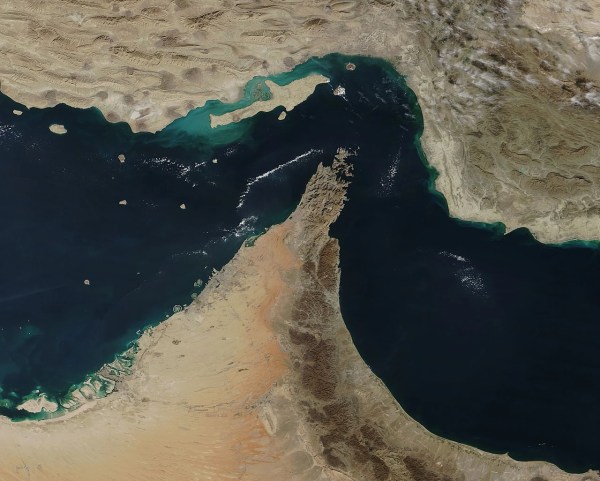
The war between the US, Israel, and Iran has put the Strait of Hormuz at the center of a debate that goes beyond the conflict itself. Iran now seeks to turn the waterway into a source of revenue, and in doing so, it has drawn attention to how countries have long used geography to generate income.
Iran has told Reuters that it wants any peace deal to include recognition of its right to charge fees for ships passing through the Strait of Hormuz. A senior Iranian official said the fee would vary depending on the type of ship and its cargo. Iran’s deputy foreign minister has also said that Tehran is drafting a protocol with Oman to require ships to obtain permits before transiting the waterway.
The numbers reveal what Iran stands to gain. Around 20 million barrels of crude oil and oil products pass through the Strait of Hormuz each day, roughly equivalent to about 10 large crude carriers. At a fee of $2 million per tanker, that would generate around $20 million a day, or about $600 million a month from oil alone. If liquefied natural gas shipments are included, that figure could rise to more than $800 million a month.
Egypt already earns between $700 and $800 million a month from the Suez Canal. The Suez Canal was projected to reach $4.2 billion in revenues for 2025. The Panama Canal recorded $5.7 billion in fiscal year 2025. Both are man-made waterways, and countries justify fees on the basis of the capital they spent to build and maintain them.
Natural straits operate under a different framework. Six non-circumventable natural chokepoints exist in the world: the Strait of Hormuz, the Strait of Malacca, the Bab el-Mandeb, the Turkish Straits, the Danish Straits, and the Strait of Gibraltar. None of these has carried mandatory tolls since 1945. Turkey charges fees for pilotage and navigation services but not for the right of transit itself. Singapore charges no fee to transit the Singapore Strait.
US Secretary of State Marco Rubio called Iran’s toll plan illegal at a G7 meeting. Foreign ministers from the group stressed the need to restore free navigation through the strait. Rubio said the world needs a plan to confront it.
Iran, however, argues that wartime conditions allow it to act outside peacetime rules. Reports indicate that Iran has already begun charging tolls on selected vessels. Ships have paid fees in Chinese currency and crypto to receive Iranian naval escorts through the strait.
The Strait of Malacca handled 23.2 million barrels of oil per day in the first half of 2025 and carried up to 30 percent of all seaborne trade. Indonesia, Malaysia, and Singapore currently collaborate on navigation and security in the strait but do not impose transit fees.
The Bab el-Mandeb Strait carries four to five million barrels of oil per day and ten to fourteen percent of global maritime trade. Yemen’s Houthis have disrupted shipping there, but alternative routes exist.
Analysts note that the Hormuz crisis has broken a taboo. Free passage through a waterway has moved from an assumed right to a negotiable condition. The outcome of the Iran peace deal will determine whether that shift takes root.
For more news and update, click here to download our mobile app – Veritas Daily
To explore advertising or sponsorship collaborations, click here to contact us
