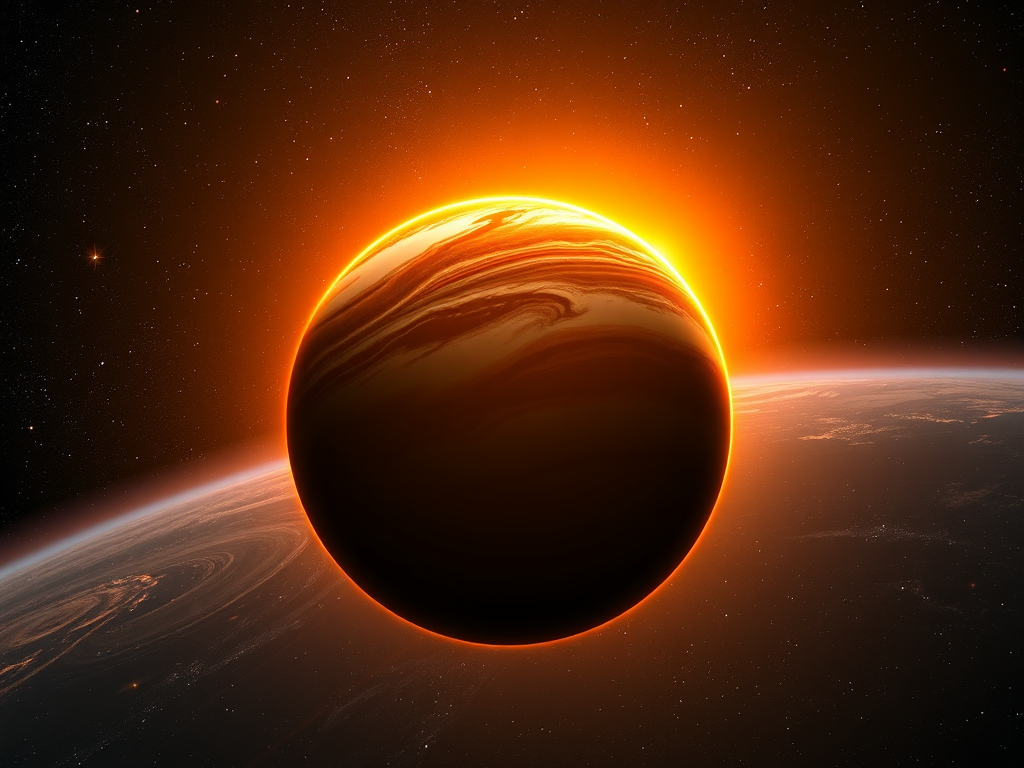
On 6 October 1995, astronomers Michel Mayor and Didier Queloz revolutionized our understanding of the cosmos with the discovery of 51 Pegasi b — the first confirmed planet orbiting a Sun-like star beyond our Solar System. Detected using the Elodie spectrograph at the Haute-Provence observatory in France, this “hot Jupiter” defied expectations. Unlike the gas giants in our system, 51 Pegasi b orbits extremely close to its star, completing a circuit every 4.23 days with scorching atmospheric temperatures exceeding 1,000°C.
The discovery, initially met with skepticism, opened a new chapter in astronomy. By observing the subtle wobble in the star’s “barcode” spectrum caused by the gravitational pull of the planet, Mayor and Queloz revealed a world vastly different from those previously imagined. Their groundbreaking work proved that planets outside our Solar System—exoplanets—were real and detectable.
Since then, over 6,000 exoplanets have been identified, ranging from scorching gas giants to rocky worlds. Yet the ultimate prize remains elusive: finding a true “twin Earth” capable of sustaining life. As exoplanet hunters like Christopher Watson and Annelies Mortier continue the search, each discovery brings us closer to answering whether Earth is unique or one of many habitable worlds scattered across the galaxy.

Leave a Reply