
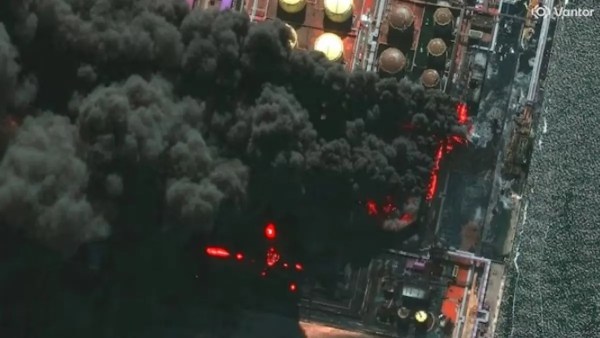
Ukrainian drones strike Russia’s Ust-Luga port for fifth time in ten days, hit oil loading terminal

Moscow/Kyiv — Ukrainian drones struck Russia’s Baltic Sea port of Ust-Luga on Tuesday, marking the fifth attack on the facility in ten days. Three industry sources told Reuters that the drones hit crude oil loading facilities operated by Transneft, Russia’s state pipeline monopoly. Transneft did not respond to a request for comment. Regional governor Alexander Drozdenko said three people, including two children, sustained injuries in the overnight attacks and several buildings took damage.

Authorities confirmed Ust-Luga was struck on March 22, 25, 27, 29, and 31, with each attack forcing suspensions of export operations at the port. Ust-Luga sits on the south-eastern shore of the Gulf of Finland and handles crude oil and oil products across a network of processing facilities and export terminals. The port exported 32.9 million metric tons of oil products last year and typically moves around 700,000 barrels of crude per day.

Ukraine has stepped up attacks on Russia’s oil export infrastructure over the past month, launching its densest drone campaign of the four-year war against the Baltic ports of Ust-Luga and Primorsk. Reuters calculations based on market data show that at least 40 percent of Russia’s oil export capacity now sits halted, the result of drone strikes, a disputed attack on a pipeline, and the seizure of tankers.

Ukrainian President Volodymyr Zelenskyy said on Monday that some of Kyiv’s allies sent signals urging Ukraine to scale back its drone strikes on Russian oil infrastructure as energy prices rise across global markets. The Iran war has already pushed WTI Crude above $100 per barrel, and sustained attacks on Russian oil exports add further pressure to a market already under strain from the Hormuz closure.

The combination of disruptions from two fronts — the Hormuz closure in the Gulf and drone strikes on Russian Baltic ports — now threatens to keep energy markets under pressure well beyond the current crisis, with no resolution in sight on either front.

For more news and update, click here to download our mobile app – Veritas Daily

To explore advertising or sponsorship collaborations, click here to contact us

Two Cosco ships cross Strait of Hormuz on second attempt — first container vessels to exit Gulf since war began

Beijing/Dubai — Two container ships linked to China’s state-owned Cosco Shipping Corp, the CSCL Indian Ocean and CSCL Arctic Ocean, exited the Persian Gulf through the Strait of Hormuz on Monday after a failed attempt days earlier. Ship-tracking data from MarineTraffic and Bloomberg confirmed the vessels cleared the strait and entered the Gulf of Oman, travelling close together and routing near Iran’s Larak and Qeshm islands at the waterway’s narrowest point. Both ships broadcast “China Owner” signals on their identification systems during the transit.

The crossing marks the first time container ships operated by a major company have transited the strait since Iran effectively shut the waterway when the US-Israel war on Iran began on February 28. The two vessels had previously tried to exit on Friday but turned back near Larak Island after the IRGC Navy warned them off, reportedly because the ships had recently visited ports in countries Iran considers hostile.

China’s foreign ministry spokesperson Mao Ning confirmed the passage and called for an immediate ceasefire, saying the strait forms an important route for global trade and energy supplies. The ministry did not offer details on how the ships secured clearance for Monday’s crossing.

Iran’s foreign minister had announced on March 26 that ships from five nations — China, Russia, India, Iraq, and Pakistan — could coordinate passage through the strait. However, the failed Friday attempt showed that clearance procedures remain inconsistent. Analysts at Kpler noted that the Monday crossing marked a first for non-Iranian container vessels since the conflict began.

Most Chinese tankers and cargo ships continue to wait at anchorages north of the UAE, with shipping firms weighing safety risks and insurance uncertainties before sending vessels through the waterway. Cosco has resumed bookings for containers from the Far East to Gulf countries, signalling a cautious return to operations, but the bulk of the fleet remains anchored until the situation stabilises.

For more news and update, click here to download our mobile app – Veritas Daily

To explore advertising or sponsorship collaborations, click here to contact us

Dubai authorities extinguish fire on Kuwaiti oil tanker hit by drone attack; all 24 crew safe

Dubai — Response teams extinguished the fire on a Kuwaiti oil tanker after a drone struck the vessel at Anchorage E in Dubai’s waters on Tuesday. Dubai authorities confirmed that crews brought the blaze under control in line with established safety procedures and found no oil leakage at the site. All 24 crew members on board remained safe, with no injuries reported.

The Dubai Media Office issued updates as maritime firefighting teams worked through the incident and confirmed the situation was contained. Relevant teams will continue to assess the vessel and surrounding waters, with further updates to follow once available.

The attack on the tanker forms part of a pattern of Iranian strikes on commercial shipping in the Gulf since the US and Israel launched operations against Iran on February 28. Kuwait Petroleum Corp earlier identified the vessel as the crude carrier Al-Salmi and warned of a possible oil spill in surrounding waters. Dubai authorities’ confirmation of no leakage removes that immediate environmental risk.

The incident underlines the exposure of Gulf ports and shipping lanes to the conflict. The Strait of Hormuz, through which roughly one-fifth of global oil flows, remains closed under Iranian control. With the April 6 deadline for a US-Iran deal now less than a week away, commercial vessels operating in Gulf waters continue to face risk from drone and missile attacks as both sides hold their positions.

For more news and update, click here to download our mobile app – Veritas Daily

To explore advertising or sponsorship collaborations, click here to contact us

Powered by WordPress.com.

Up ↑