



Iran launched a ballistic missile carrying a cluster bomb warhead at central Israel on March 22, 2026. The missile scattered bomblets across the Tel Aviv area, injuring at least 10 people and damaging homes and roads across multiple impact sites.
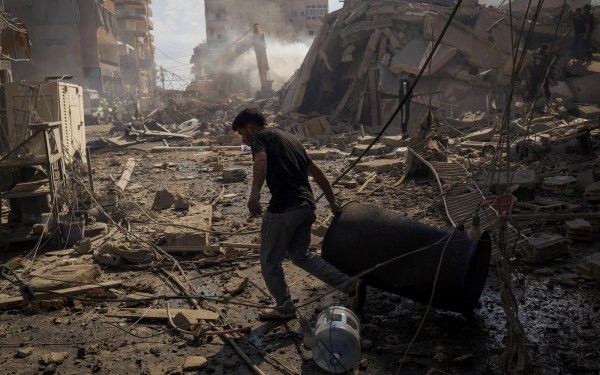
Emergency rescue services confirmed the injuries across several bomblet impact sites in Tel Aviv and surrounding areas. Rescue teams responded to multiple locations where submunitions struck roads and homes. Workers recorded damage across the zone, with the number of casualties expected to rise as teams continue to search impact sites.
Iranian cluster warheads carry approximately 24 submunitions, each containing 2–5 kilograms of explosives. The warhead breaks apart at an altitude of 7–10 kilometers above the ground, creating dozens of separate impact sites. Each submunition detonates on contact with the ground or a hard surface.
Israeli military spokesperson Lieutenant Colonel Nadav Shoshani acknowledged that air defense efforts have had results but remain imperfect. Defense analysts note that cluster missiles must be intercepted above the atmosphere, as far as possible from the target area. Once the cluster bombs release within the atmosphere, interception becomes impossible.
Iran has launched more than 100 cluster missiles at Israel since the start of the conflict. At least 11 cluster missiles have penetrated Israel’s air defense system without interception.
The Tel Aviv strike came hours after Iran launched ballistic missiles at the southern Israeli cities of Dimona and Arad overnight. The Home Front Command confirmed that nearly all those injured in both cities were not inside bomb shelters at the time of impact. In Dimona, the missile struck soft ground next to homes, with the shockwave damaging surrounding buildings and injuring around 30 people. In Arad, the missile landed between several apartment buildings, injuring nearly 90 people, including 10 in serious condition.
The United States conducted strikes on Iran’s Natanz nuclear facility on March 21. Iran launched the Dimona and Arad attacks in direct response, stating it targeted the Shimon Peres Negev Nuclear Research Center. Iran also attempted to strike the joint US-UK military base at Diego Garcia in the British Indian Ocean Territory. One missile broke apart mid-flight and a second was intercepted by an SM-3 air defense system.
For more news and update, click here to download our mobile app – Veritas Daily
To explore advertising or sponsorship collaborations, click here to contact us

