
Russian Strike Kills Three in Ukraine as Attacks Continue

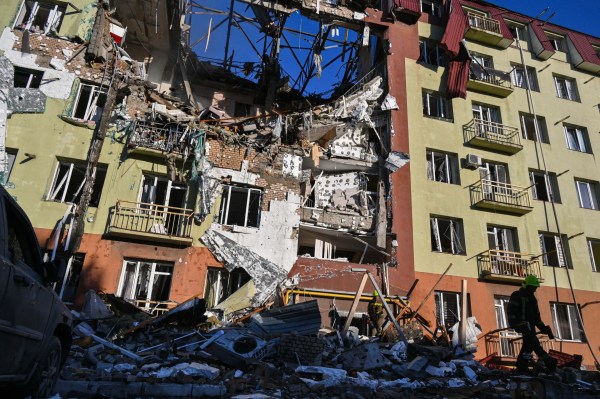
A Russian strike killed three people on April 7 in Nikopol, according to officials in Ukraine. Authorities said a drone hit a city bus during morning travel hours and injured at least 12 others.

Officials reported that emergency services reached the site and transported the injured to hospitals. Local authorities said the strike damaged the bus and nearby infrastructure. Investigators recorded details of the attack and began assessment of the impact.

Ukrainian officials stated that Russian forces carried out strikes in other areas on the same day. Reports from Odesa said another attack killed three people and injured others. Authorities said these strikes targeted locations used by civilians.

Volodymyr Zelenskyy said that attacks continue across regions and called for support from partner countries. He said Ukraine needs assistance to respond to ongoing strikes and to protect infrastructure and civilians.

Officials stated that Russian forces have continued the use of drones and missiles in multiple regions. Local administrations reported damage to transport systems and residential areas following recent strikes.

No ceasefire agreement has been reached. Authorities continue to monitor the situation and respond to incidents as they occur.

The conflict between Russia and Ukraine remains active, with strikes reported across several regions on April 7.

For more news and update, click here to download our mobile app – Veritas Daily

To explore advertising or sponsorship collaborations, click here to contact us
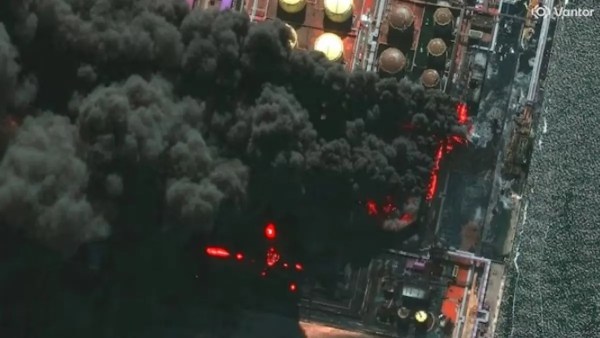
Ukrainian drones strike Russia’s Ust-Luga port for fifth time in ten days, hit oil loading terminal

Moscow/Kyiv — Ukrainian drones struck Russia’s Baltic Sea port of Ust-Luga on Tuesday, marking the fifth attack on the facility in ten days. Three industry sources told Reuters that the drones hit crude oil loading facilities operated by Transneft, Russia’s state pipeline monopoly. Transneft did not respond to a request for comment. Regional governor Alexander Drozdenko said three people, including two children, sustained injuries in the overnight attacks and several buildings took damage.

Authorities confirmed Ust-Luga was struck on March 22, 25, 27, 29, and 31, with each attack forcing suspensions of export operations at the port. Ust-Luga sits on the south-eastern shore of the Gulf of Finland and handles crude oil and oil products across a network of processing facilities and export terminals. The port exported 32.9 million metric tons of oil products last year and typically moves around 700,000 barrels of crude per day.

Ukraine has stepped up attacks on Russia’s oil export infrastructure over the past month, launching its densest drone campaign of the four-year war against the Baltic ports of Ust-Luga and Primorsk. Reuters calculations based on market data show that at least 40 percent of Russia’s oil export capacity now sits halted, the result of drone strikes, a disputed attack on a pipeline, and the seizure of tankers.

Ukrainian President Volodymyr Zelenskyy said on Monday that some of Kyiv’s allies sent signals urging Ukraine to scale back its drone strikes on Russian oil infrastructure as energy prices rise across global markets. The Iran war has already pushed WTI Crude above $100 per barrel, and sustained attacks on Russian oil exports add further pressure to a market already under strain from the Hormuz closure.

The combination of disruptions from two fronts — the Hormuz closure in the Gulf and drone strikes on Russian Baltic ports — now threatens to keep energy markets under pressure well beyond the current crisis, with no resolution in sight on either front.

For more news and update, click here to download our mobile app – Veritas Daily

To explore advertising or sponsorship collaborations, click here to contact us

Kaja Kallas leads EU foreign ministers to Kyiv on fourth anniversary of Bucha massacre

EU foreign policy chief Kaja Kallas and several EU foreign ministers travelled to Kyiv on Tuesday to mark the fourth anniversary of the Bucha massacre and reaffirm EU backing for Ukraine, even as disagreements over aid and membership talks persist within the bloc.

Kyiv — EU foreign policy chief Kaja Kallas led a delegation of EU foreign ministers to Kyiv on Tuesday, the fourth anniversary of the Bucha massacre. The group travelled from the Ukrainian capital to Bucha, the town where Russian forces killed over 400 civilians during the early weeks of the war in 2022. The visit placed EU solidarity with Ukraine on record on a date that carries weight for both sides of the conflict.

Kallas used the visit to reaffirm the EU’s commitment to provide Ukraine with military, financial, and humanitarian support. She made the statement against a backdrop of internal EU disagreements over blocked financial aid and the pace of Ukraine’s membership negotiations with the bloc. Several member states have stalled or conditioned their support, creating friction that the Kyiv visit sought to address publicly.

The delegation also underlined Europe’s position on accountability, calling on the international community to hold Russia responsible for war crimes committed in Ukraine. Bucha has served as a focal point for those calls since images from the town in April 2022 triggered international condemnation and drove several countries to impose further sanctions on Moscow.

The visit takes place as global attention has shifted toward the US-Iran conflict and the closure of the Strait of Hormuz, raising concerns in Kyiv and among European governments that the Ukraine war risks losing political and financial support to competing crises. Kallas addressed that concern directly, saying Europe’s commitment to Ukraine does not diminish as other conflicts develop.

Russia has not responded publicly to the EU delegation’s visit. The war in Ukraine, now in its fifth year, continues along a front line that stretches across eastern and southern Ukraine, with no ceasefire negotiations in progress.

For more news and update, click here to download our mobile app – Veritas Daily

To explore advertising or sponsorship collaborations, click here to contact us
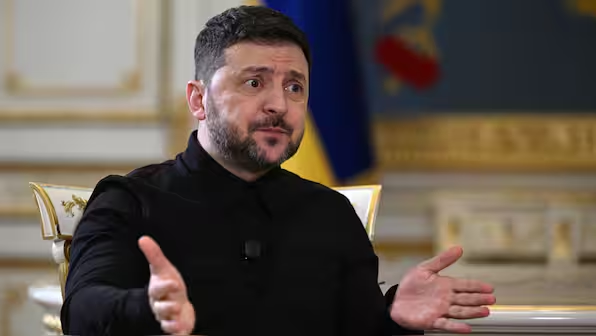
Russia Fires Nearly 1,000 Drones at Ukraine, Kills Eight, Hits UNESCO Site in Lviv

Russia carried out one of the largest aerial attacks since the start of its war on Ukraine, launching 948 drones in a 24-hour period targeting multiple cities across the country.

The attacks killed at least eight people and struck the UNESCO-protected historic centre of Lviv. Two people were killed and a maternity hospital was damaged in a drone strike on the western city of Ivano-Frankivsk. One person was killed in the Vinnytsia region as part of a daytime assault that followed an overnight barrage on residential buildings across several cities, killing five more people.

A building in part of Lviv’s Bernardine Monastery Complex, a UNESCO World Heritage site, was hit. Lviv regional head Maksym Kozytskyi said fire engulfed buildings adjacent to the complex and experts had yet to determine the full extent of the damage.

Ukraine’s Foreign Ministry reached an agreement with UNESCO to send experts to Lviv to document the damage. Foreign Minister Andrii Sybiha called on UNESCO to initiate sanctions against Russia in the field of culture.

In Lviv, Mayor Andriy Sadovyi said 26 people were hospitalised. The building struck at Cathedral Square is a monument of national importance and 17 apartments were affected.

Five people were killed and dozens wounded in strikes across the Poltava region, Kharkiv, Zaporizhzhia, and Kherson. The overnight attack cut a key power line connecting Moldova to Europe, forcing the country to declare a state of emergency. A power line to the Zaporizhzhia nuclear power plant was also cut, the IAEA reported.

Zelensky said in his daily address: “The scale of this attack makes it abundantly clear that Russia has no intention of actually ending this war.”

For more news and update, click here to download our mobile app – Veritas Daily

To explore advertising or sponsorship collaborations, click here to contact us

Powered by WordPress.com.

Up ↑