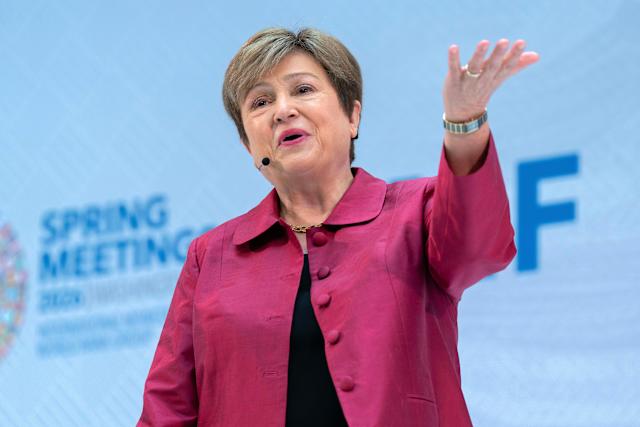
The International Monetary Fund’s (IMF) chief economist has warned that a prolonged war involving Iran could force central banks to adopt more aggressive monetary tightening policies to control inflation, as rising energy prices continue to pressure the global economy. The remarks come as policymakers assess the broader economic fallout from ongoing geopolitical tensions.
According to the IMF, the conflict has significantly increased uncertainty in global markets, with higher oil and gas prices driving inflation across both advanced and emerging economies. These pressures are complicating efforts by central banks to balance slowing growth with price stability.
The IMF noted that while earlier post-pandemic inflation was addressed with relatively moderate interest rate increases, the current environment is more difficult due to weaker underlying economic growth and reduced labor market strength in many countries. This limits policymakers’ ability to tighten gradually without risking deeper slowdowns.
The fund also highlighted that prolonged disruptions to energy supplies, particularly through key routes such as the Strait of Hormuz, could further destabilize inflation expectations. This could lead businesses to raise prices more aggressively and workers to demand higher wages, reinforcing inflationary cycles.
Under the IMF’s baseline scenario, global growth is expected to remain stable but subdued. However, more severe scenarios involving extended conflict and sustained high oil prices could significantly weaken output and increase the likelihood of recession risks in some regions.
Overall, the IMF emphasized that central banks may need to prioritize controlling inflation even at the cost of slower growth if geopolitical tensions persist, underscoring the difficult policy trade-offs created by the ongoing conflict.
For more news and update, click here to download our mobile app – Veritas Daily
To explore advertising or sponsorship collaborations, click here to contact us

Leave a Reply