Create Account
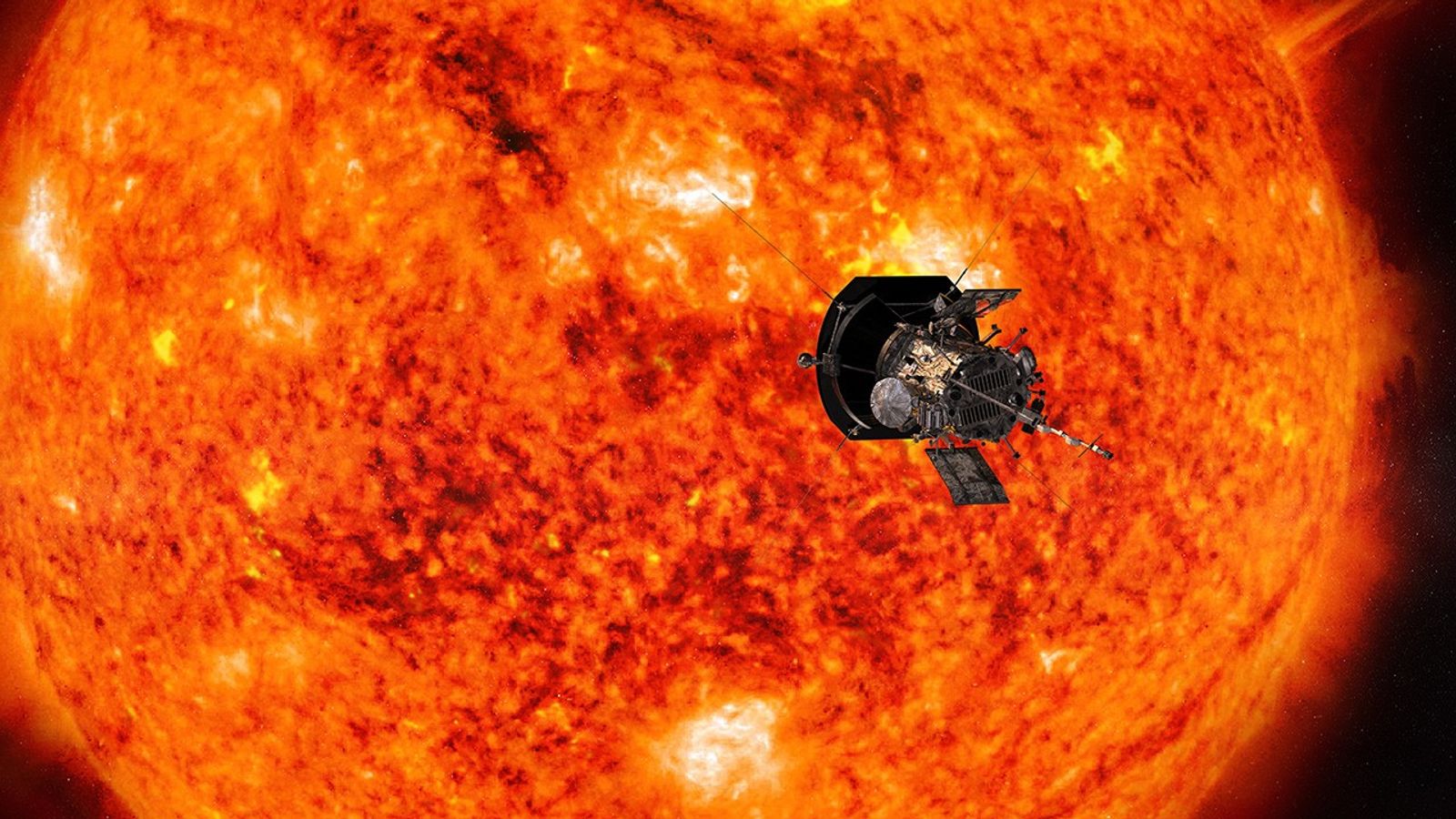
Parker Solar Probe, operated by NASA, has completed its 27th close approach to the Sun, maintaining a record distance of approximately 3.8 million miles (6.2 million kilometers) from the solar surface. The flyby, which took place on March 11, is part of the mission’s ongoing effort to study the Sun’s outer atmosphere, or corona.
During the encounter, the spacecraft operated autonomously for about a month due to limited communication near the Sun. It reconnected with mission control at Johns Hopkins Applied Physics Laboratory in Maryland on March 14, confirming normal system performance.
Between March 6 and March 16, Parker gathered data on solar wind and solar activity, including coronal mass ejections. These observations are key to improving understanding of space weather, which can impact satellites, power grids, and astronaut safety.
The probe also matched its record speed of approximately 430,000 miles per hour (687,000 kilometers per hour), reinforcing its status as the fastest human-made object. Since its launch in 2018, Parker has observed the Sun across different phases of its 11-year solar cycle, including the recent solar maximum.
The mission reflects decades of scientific ambition. The concept of a solar probe dates back to 1958, when scientists first proposed sending a spacecraft close to the Sun as a long-term goal. Progress was slow due to technical and budgetary challenges, but momentum increased in the early 2000s when the project became part of NASA’s Living With a Star program. The spacecraft was later named after solar physicist Eugene Parker, who first theorized the solar wind.
In 2021, Parker became the first spacecraft to enter the Sun’s atmosphere. The mission is expected to continue into the later phases of the 11 year solar cycle.
For more news and update, click here to download our mobile app – Veritas Daily
To explore advertising or sponsorship collaborations, click here to contact us